
Region I: East Texas
Texas is divided into 16 water planning regions. The 16 regions were created by looking at shared water sources, community boundaries, public input, and other factors. Here we highlight Region I in East Texas. Known for its heavily forested Piney Woods, most of this region’s water supply comes from surface water sources that support the timber, agriculture, energy, manufacturing, and water recreation industries around its lakes and waterways.
Some counties within this region may be in multiple planning areas. County-to-region assignments reflect each county’s primary designation as established by the Texas Water Development Board.
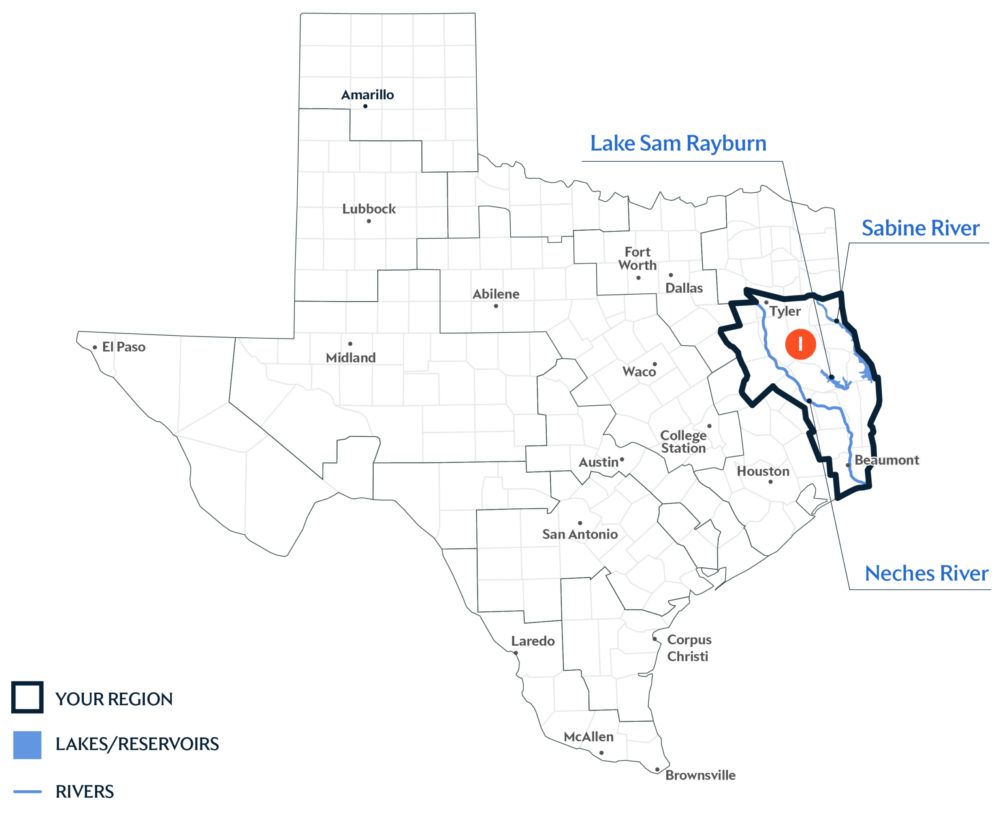
Primary Water Sources: Sabine and Neches Rivers
Located along the Texas-Louisiana border, three-quarters of the region’s current supply comes from surface water sources—primarily the Sabine and Neches rivers and tributaries.
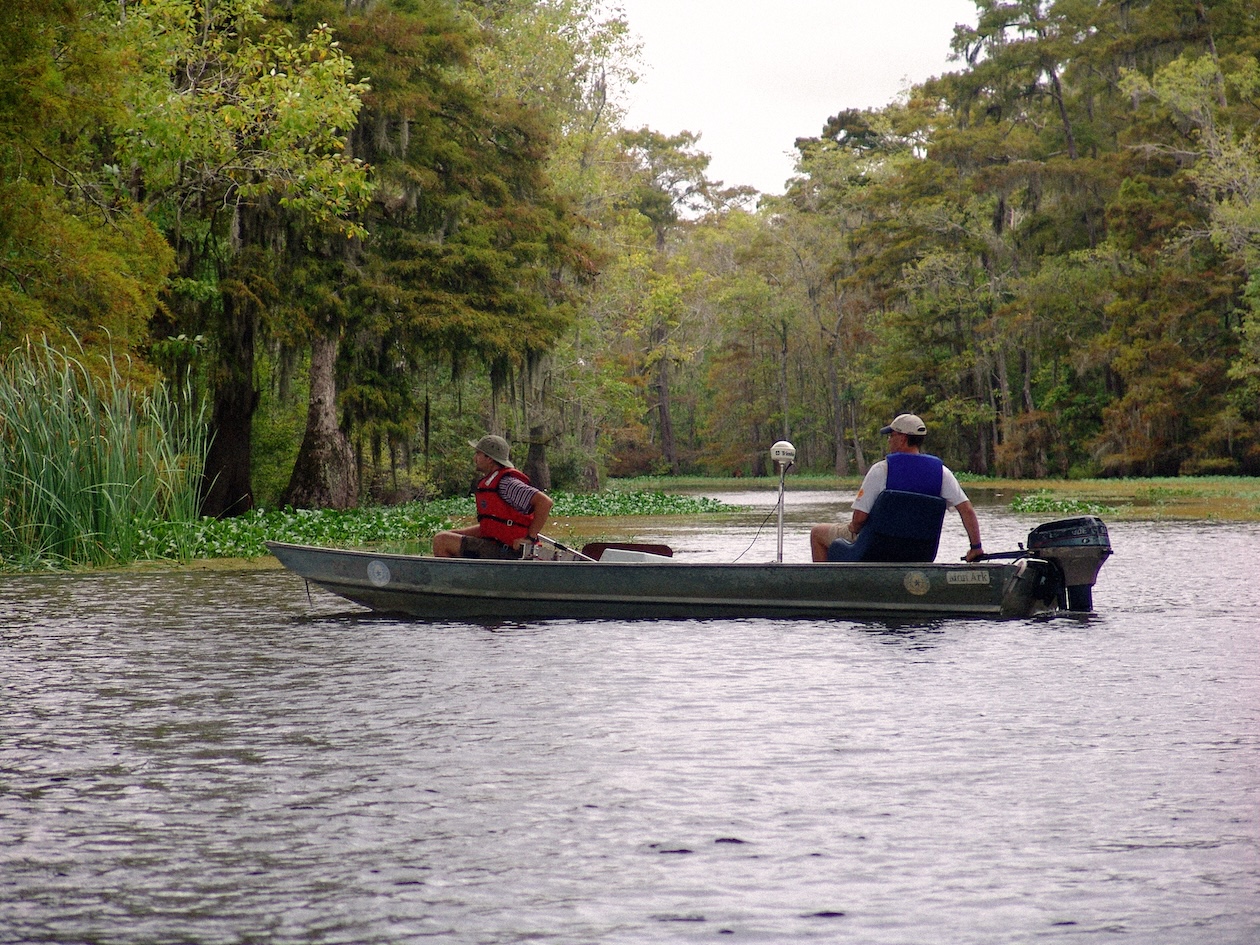
Key issues and approaches for Region I
Meeting industrial demand, while improving access to existing supplies, and addressing localized shortages shape planning in East Texas. The regional water plan—updated every five years and projected through 2080—highlights municipal conservation, groundwater well expansion, and developing new surface water supplies like reservoirs to improve long-term reliability.
Dive deeper into the Interactive 2027 Draft State Water Plan and learn more about Region I.